
Steel and stainless steel: renewed price pressure ahead of 2027
European steel faces renewed price pressure ahead of 2027 as CBAM and high stainless steel alloy surcharges (316L, 304, 301) impact wire and sheet metal.
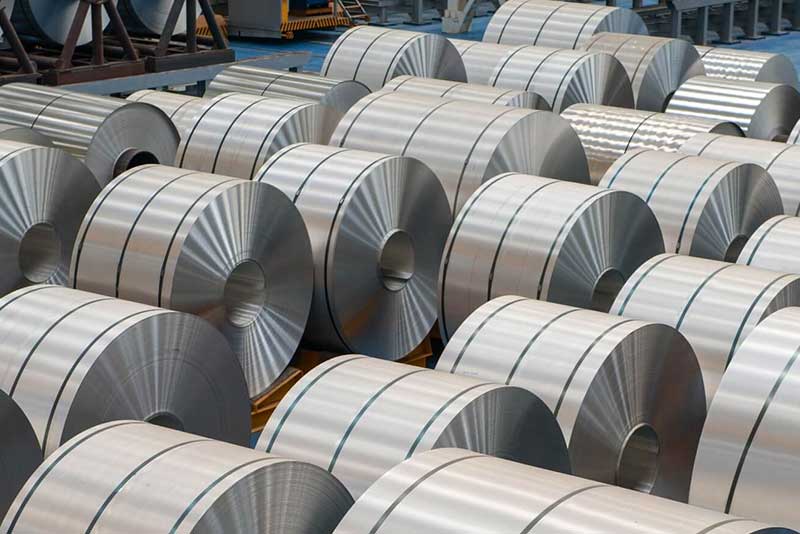
The European steel market is facing renewed upward price pressure, while stainless steel alloy surcharges remain significantly above their levels at the beginning of the year. These developments directly affect industries using sheet metal and wire components.
Steel: upward pressure on European prices
Market participants are drawing attention to import restrictions and rising European steel prices. Despite continued weakness in industrial demand, producers are seeking to raise their prices ahead of the first quarter of 2027.
Several factors contribute to this pressure: tighter European trade restrictions, fewer sourcing opportunities outside the European Union, the Carbon Border Adjustment Mechanism (CBAM), and energy, production and transport costs.
CBAM, which entered its definitive phase in 2026, aims to bring the carbon cost of imported products closer to that borne by European producers. Combined with trade protection measures, it may change the economics of imports and reduce opportunities to switch between suppliers.
These tensions do not necessarily indicate a recovery in steel consumption. They also reflect changing supply conditions. Price increases announced by producers must therefore be distinguished from actual negotiated prices, which continue to depend on volumes, grades and delivery lead times.
Stainless steel: alloy surcharges remain high
The price of stainless steel generally consists of a base price (the price of the steel) plus an alloy surcharge. Updated monthly, this component reflects changes in the cost of nickel, chromium and molybdenum in particular. It varies according to the chemical composition of the grade and the product form.
Looking at 2026, there was a marked increase in the first half of the year, followed by a partial decline during the summer for several grades. November levels nevertheless remain significantly higher than in January. Stainless steels containing molybdenum, particularly 316L and 316Ti, show especially substantial increases.
For drawn wire, between January and November 2026, the alloy surcharge rose from €2.238 to €2.771/kg for 302 (+23.8%), from €2.352 to €2.902/kg for 304 (+23.4%), from €3.900 to €5.230/kg for 316L (+34.1%) and from €1.189 to €1.564/kg for 430 (+31.5%). For cold-rolled products, the surcharge increased by 12.5% for 304 and 25.4% for 316L.
For precision strip, the surcharge for 301 stainless steel rose from €2.269 to €2.540/kg (+11.9%) and for 316L from €3.952 to €4.957/kg (+25.4%). In the case of 316L wire, the increase of €1.330/kg since January illustrates the potential impact of this component on purchasing costs.
These changes relate to the alloy surcharge, not the total material price. They differ according to grade, product form and supplier.
Stainless steel alloy surcharge trends (€/kg)
Monthly benchmark evolution from Nov 2025 to Nov 2026 — Cold-rolled (430, 304, 316L) & Precision strip (301)
Detailed alloy surcharges by product form (€/kg)
Complete monthly schedule (Nov 2025 – Nov 2026) and Jan–Nov 2026 variation
| AISI | EN | Th. (mm) | Nov 25 | Dec 25 | Jan 26 | Feb 26 | Mar 26 | Apr 26 | May 26 | Jun 26 | Jul 26 | Aug 26 | Sep 26 | Oct 26 | Nov 26 | Jan→Nov 26 |
|---|---|---|---|---|---|---|---|---|---|---|---|---|---|---|---|---|
| Cold-rolled | ||||||||||||||||
| 430 | 1.4016 | 0.40 – 3 | 0.988 | 1.000 | 1.032 | 1.029 | 1.042 | 1.086 | 1.112 | 1.110 | 1.117 | 1.112 | 1.100 | 1.093 | 1.132 | +9.7% |
| 304 | 1.4301 | 0.40 – 3 | 1.911 | 1.932 | 1.939 | 2.140 | 2.151 | 2.211 | 2.243 | 2.365 | 2.339 | 2.216 | 2.219 | 2.176 | 2.181 | +12.5% |
| 304 L | 1.4307 | 0.40 – 3 | 1.911 | 1.932 | 1.939 | 2.140 | 2.151 | 2.211 | 2.243 | 2.365 | 2.339 | 2.216 | 2.219 | 2.176 | 2.181 | +12.5% |
| 321 | 1.4541 | 0.40 – 3 | 2.090 | 2.112 | 2.113 | 2.349 | 2.360 | 2.423 | 2.457 | 2.597 | 2.566 | 2.424 | 2.428 | 2.379 | 2.379 | +12.6% |
| 316 L | 1.4404 | 0.40 – 3 | 3.298 | 3.291 | 3.213 | 3.517 | 3.653 | 3.807 | 3.813 | 4.056 | 4.089 | 3.980 | 4.024 | 3.990 | 4.030 | +25.4% |
| 316 TI | 1.4571 | 0.40 – 3 | 3.343 | 3.337 | 3.257 | 3.570 | 3.706 | 3.861 | 3.867 | 4.115 | 4.147 | 4.033 | 4.077 | 4.042 | 4.080 | +25.3% |
| 305 | 1.4303 | 0.40 – 3 | 2.326 | 2.350 | 2.344 | 2.628 | 2.639 | 2.705 | 2.740 | 2.907 | 2.868 | 2.698 | 2.706 | 2.648 | 2.640 | +12.6% |
| 304 L | 1.4306 | 0.40 – 3 | 2.137 | 2.158 | 2.159 | 2.395 | 2.407 | 2.470 | 2.503 | 2.644 | 2.613 | 2.471 | 2.476 | 2.426 | 2.426 | +12.4% |
| 441 | 1.4509 | 0.40 – 3 | 1.263 | 1.276 | 1.313 | 1.309 | 1.320 | 1.363 | 1.389 | 1.387 | 1.393 | 1.387 | 1.375 | 1.369 | 1.407 | +7.2% |
| 316SL | 1.4435 | 0.40 – 3 | 3.735 | 3.724 | 3.624 | 3.975 | 4.139 | 4.316 | 4.317 | 4.600 | 4.643 | 4.523 | 4.577 | 4.541 | 4.584 | +26.5% |
| Precision strip | ||||||||||||||||
| 430 | 1.4016 | 0 – < 0.4 | 1.215 | 1.230 | 1.269 | 1.266 | 1.282 | 1.336 | 1.368 | 1.365 | 1.374 | 1.368 | 1.353 | 1.344 | 1.392 | +9.7% |
| 304 | 1.4301 | 0 – < 0.4 | 2.351 | 2.376 | 2.385 | 2.632 | 2.646 | 2.720 | 2.759 | 2.909 | 2.877 | 2.726 | 2.729 | 2.676 | 2.683 | +12.5% |
| 301 | 1.4310 | 0 – 3 | 2.234 | 2.258 | 2.269 | 2.501 | 2.513 | 2.583 | 2.621 | 2.752 | 2.720 | 2.578 | 2.579 | 2.530 | 2.540 | +11.9% |
| 304 L | 1.4307 | 0 – < 0.4 | 2.351 | 2.376 | 2.385 | 2.632 | 2.646 | 2.720 | 2.759 | 2.909 | 2.877 | 2.726 | 2.729 | 2.676 | 2.683 | +12.5% |
| 321 | 1.4541 | 0 – < 0.4 | 2.571 | 2.598 | 2.599 | 2.889 | 2.903 | 2.980 | 3.022 | 3.194 | 3.156 | 2.982 | 2.986 | 2.926 | 2.926 | +12.6% |
| 316 L | 1.4404 | 0 – < 0.4 | 4.057 | 4.048 | 3.952 | 4.326 | 4.493 | 4.683 | 4.690 | 4.989 | 5.029 | 4.895 | 4.950 | 4.908 | 4.957 | +25.4% |
| 316Ti | 1.4571 | 0 – 3 | 4.112 | 4.105 | 4.006 | 4.391 | 4.558 | 4.749 | 4.756 | 5.061 | 5.101 | 4.961 | 5.015 | 4.972 | 5.018 | +25.3% |
| 305 | 1.4303 | 0 – < 0.4 | 2.931 | 2.961 | 2.953 | 3.311 | 3.325 | 3.408 | 3.452 | 3.663 | 3.614 | 3.399 | 3.410 | 3.336 | 3.326 | +12.6% |
| 304 L | 1.4306 | 0 – < 0.4 | 2.629 | 2.654 | 2.656 | 2.946 | 2.961 | 3.038 | 3.079 | 3.252 | 3.214 | 3.039 | 3.045 | 2.984 | 2.984 | +12.3% |
| 441 | 1.4509 | 0 – < 0.4 | 1.553 | 1.569 | 1.615 | 1.610 | 1.624 | 1.676 | 1.708 | 1.706 | 1.713 | 1.706 | 1.691 | 1.684 | 1.731 | +7.2% |
| 316 SL | 1.4435 | 0 – < 0.4 | 4.594 | 4.581 | 4.458 | 4.889 | 5.091 | 5.309 | 5.310 | 5.658 | 5.711 | 5.563 | 5.630 | 5.585 | 5.638 | +26.5% |
| Drawn wire | ||||||||||||||||
| 302 | 1.4310 | 0 – 100 | 2.213 | 2.213 | 2.238 | 2.493 | 2.515 | 2.617 | 2.686 | 2.817 | 2.801 | 2.704 | 2.764 | 2.742 | 2.771 | +23.8% |
| 304 | 1.4301 | 0 – 100 | 2.332 | 2.331 | 2.352 | 2.630 | 2.652 | 2.757 | 2.826 | 2.970 | 2.951 | 2.840 | 2.902 | 2.876 | 2.902 | +23.4% |
| 430 | 1.4016 | 0 – 100 | 1.113 | 1.121 | 1.189 | 1.211 | 1.220 | 1.306 | 1.372 | 1.369 | 1.387 | 1.430 | 1.471 | 1.495 | 1.564 | +31.5% |
| 316L | 1.4404 | 0 – 100 | 4.033 | 3.999 | 3.900 | 4.317 | 4.504 | 4.747 | 4.779 | 5.069 | 5.145 | 5.052 | 5.172 | 5.128 | 5.230 | +34.1% |
| 304L | 1.4307 | 0 – 100 | 2.332 | 2.331 | 2.352 | 2.630 | 2.652 | 2.757 | 2.826 | 2.970 | 2.951 | 2.840 | 2.902 | 2.876 | 2.902 | +23.4% |
Outlook and recommendations
The combination of import restrictions, energy costs and volatility in alloying element prices could maintain pressure on prices over the coming months. Actual price developments will also depend on European industrial demand and supply conditions. An across-the-board increase is therefore not a foregone conclusion.
As a manufacturer of wire and sheet metal components, Filame closely monitors these developments. Our objective remains to manage procurement costs as effectively as possible, ensure continuity of supply and minimise the impact of these fluctuations on our customers wherever possible.
Against this backdrop, a prudent approach would be to anticipate requirements for the first few months of 2027 to facilitate procurement and production planning.