Anticorrosion Coatings & Industrial Surface Treatments
Maximize corrosion resistance, fatigue endurance, and functional reliability with Filame's engineering expertise in 11 certified industrial surface treatments.
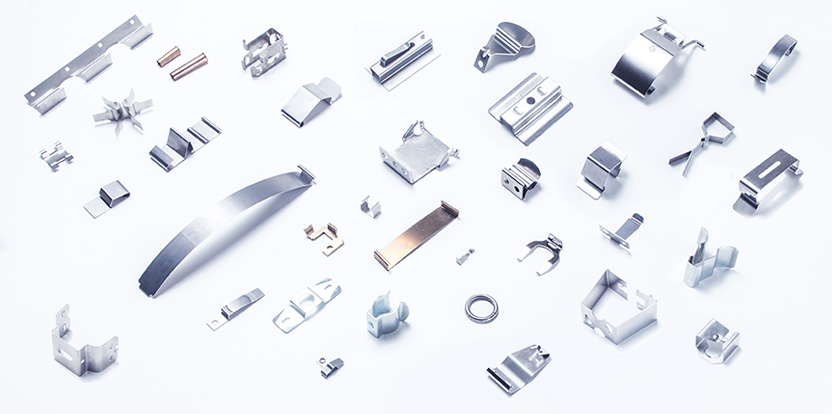
In the serial production of technical springs, precision stampings, and fabricated sheet metal assemblies, surface finishing directly governs mechanical endurance, environmental longevity, and assembly integrity.
Filame operates a qualified network of barrel, rack, and dip-spin finishing lines complying with the most stringent industrial standards (ISO 9227, ISO 10683, DIN 50979, ISO 24251-1). From hydrogen embrittlement mitigation to dynamic fatigue strengthening, explore our 11 industrial finishing and protective coating processes.
Mechanical Finishing & Pre-treatments
Deburring & Vibratory Finishing (Tumbling)
- The Process: Mechanical bulk finishing where components are agitated in vibrating bowls or rotating barrels with abrasive ceramic or synthetic media and liquid corrosion inhibitors.
- Key Advantages: Complete removal of stamping shears, uniform edge radiusing, and edge softening without altering dimensional part tolerances.
- Problems Solved: Eliminates micro-notch stress concentration risers along cut edges of stamped components and parts produced via precision laser cutting. Prevents operator cut hazards and jamming on customer automated feed tracks.
Mechanical & Electrolytic Polishing
- The Process: Progressive mechanical polishing using abrasive belts and polishing buffs, or selective anodic electrochemical dissolution in an acid electrolyte (electropolishing) for austenitic stainless steels.
- Key Advantages: Produces specular surface finishes (Ra < 0.2 µm), strips oxide scale, and enriches the chromium-to-iron ratio in the passive layer.
- Problems Solved: Eliminates microbial adhesion and meets strict cleanability standards for medical and pharmaceutical components. Removes microscopic surface irregularities that initiate localized pitting corrosion in chloride-bearing environments.
Shot Peening (Fatigue Life Extension)
- The Process: High-velocity bombardment of component surfaces with a controlled stream of spherical cast steel or ceramic shot.
- Key Advantages: Induces deep, uniform compressive residual stresses (up to -800 MPa) within the sub-surface layer.
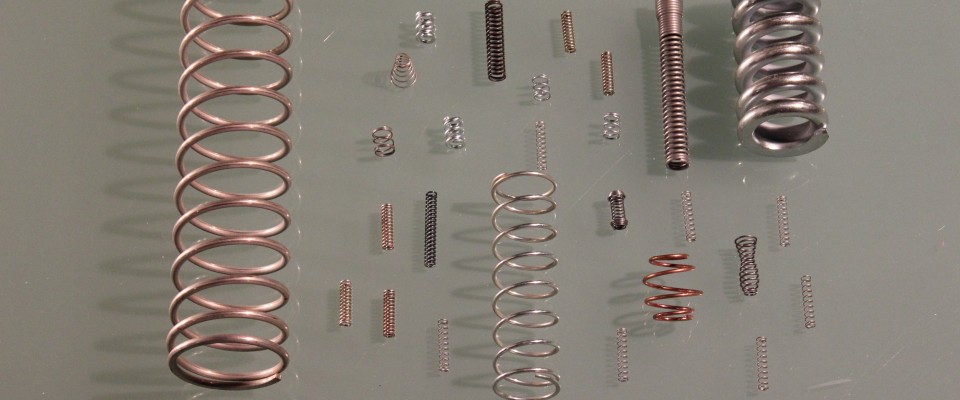
- Problems Solved: Delays fatigue crack initiation and retards cyclic crack growth. Increases dynamic fatigue cycles by 30% to 50% on heavily stressed compression springs and torsion springs used in automotive drivetrains, agricultural machinery, and defense systems.
Electrolytic & Galvanic Platings
White & Black Zinc Plating
- The Process: Electrodeposition of a pure zinc barrier (5 to 15 µm) in barrel or rack lines, followed by hexavalent-chromium-free passivation (CrVI-free, REACH/RoHS compliant: clear/blue iridescent or deep black) and optional organic sealing coats.
- Key Advantages: Sacrificial galvanic protection providing 96 h to >240 h of neutral salt spray resistance (ISO 9227).
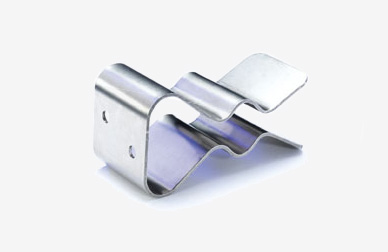
- Problems Solved: Cost-effective atmospheric corrosion protection for spring steel clips and mild steel parts formed on mechanical presses.
Electrolytic & Chemical Nickel Plating (Electroless)
- The Process: Galvanic Watts nickel electroplating or autocatalytic electroless nickel-phosphorus deposition (medium or high phosphorus).
- Key Advantages: Exceptional deposit hardness (up to 900–1,000 HV after post-heat treatment), zero edge buildup with 100% uniform coating thickness across blind holes and threads, and low friction coefficient.
- Problems Solved: Delivers wear resistance and barrier protection for sliding components formed on Bihler multi-slide machines and electrical contacts requiring reliable solderability.
Copper Plating
- The Process: Electrodeposition of a ductile copper coating from an alkaline or acid copper electrolyte.
- Key Advantages: Outstanding electrical and thermal conductivity; high substrate ductility allowing post-plating deformation without flaking.
- Problems Solved: Acts as an indispensable adhesion primer before nickel or chrome plating on carbon steels, and ensures minimal contact resistance for power connectors and terminal lugs stamped in our press stamping facility.
Hard & Decorative Chrome Plating
- The Process: Hexavalent/trivalent electrolytic deposition of chromium. Hard chrome deposits thick functional layers (10 to 50 µm) directly onto steel; decorative chrome applies a thin flash (0.3 µm) over a bright nickel base.
- Key Advantages: Extreme hardness (65 to 70 HRC / ~1,000 HV), ultra-low sliding friction coefficient, and unyielding wear resistance.
- Problems Solved: Eliminates sliding friction galling and abrasive wear on guide pins, shafts, and hydraulic components manufactured on hydraulic presses.
Chemical Conversion Coatings
Manganese & Zinc Phosphate Treatment
- The Process: Chemical immersion in an activated phosphoric acid bath, converting the substrate surface into a crystalline, microporous zinc or manganese phosphate layer.
- Key Advantages: Exceptional oil and lubricant retention, anti-galling break-in properties, excellent mechanical keying for subsequent painting, and zero risk of hydrogen pickup.
- Problems Solved: Prevents cold-welding and scuffing during initial mechanical run-in on moving parts; serves as standard under-hood corrosion protection for oiled wire forms and industrial spring mechanisms.
Non-Electrolytic Flake Coatings & High-Performance Finishes
Delta Tone (Hydrogen-Free Zinc Flake Basecoat)
- The Process: Non-electrolytic dip-spin application of a liquid dispersion containing microscopic zinc and aluminum flakes in an inorganic binder matrix, thermally cured at 200°C–240°C (compliant with ISO 10683).
- Key Advantages:
- Zero Hydrogen Embrittlement Risk: Because this process involves no acid pickling or electroplating currents, atomic hydrogen is never generated—eliminating 100% of hydrogen embrittlement hazards without requiring secondary baking.
- Superior Salt Spray Performance: Delivers 720 h to >1,500 h neutral salt spray resistance without red rust at thin coating thicknesses (8 to 12 µm).
- Dimensional Integrity: No heavy thread buildup; ideal for fine-pitch fasteners.
- Problems Solved: The premier coating solution for high-strength flat springs, engineered fasteners, and safety-critical automotive, wind turbine, and rail components.
Delta Seal (Protective Organic Topcoat)
- The Process: Dip-spin application of a thermosetting organic polymer topcoat (1 to 3 µm) directly over the cured Delta Tone basecoat.
- Key Advantages: Enhances chemical barrier resistance against automotive fuels, hydraulic fluids, and battery electrolytes; available in uniform black or silver; contains integrated internal PTFE/wax lubricants for precise friction coefficient control (µ = 0.10 to 0.16).
- Problems Solved: Ensures repeatable clamp load and automated assembly torque without stick-slip galling on fasteners and spring clips. Strongly suppresses galvanic corrosion when steel parts contact aluminum structural airframes or automotive bodies.
Epoxy Painting & Cataphoresis (E-Coat / KTL)
- The Process: Cathodic electrodeposition of waterborne epoxy resin (cataphoresis/KTL), or electrostatic dry powder coating baked in curing ovens at 180°C–200°C.
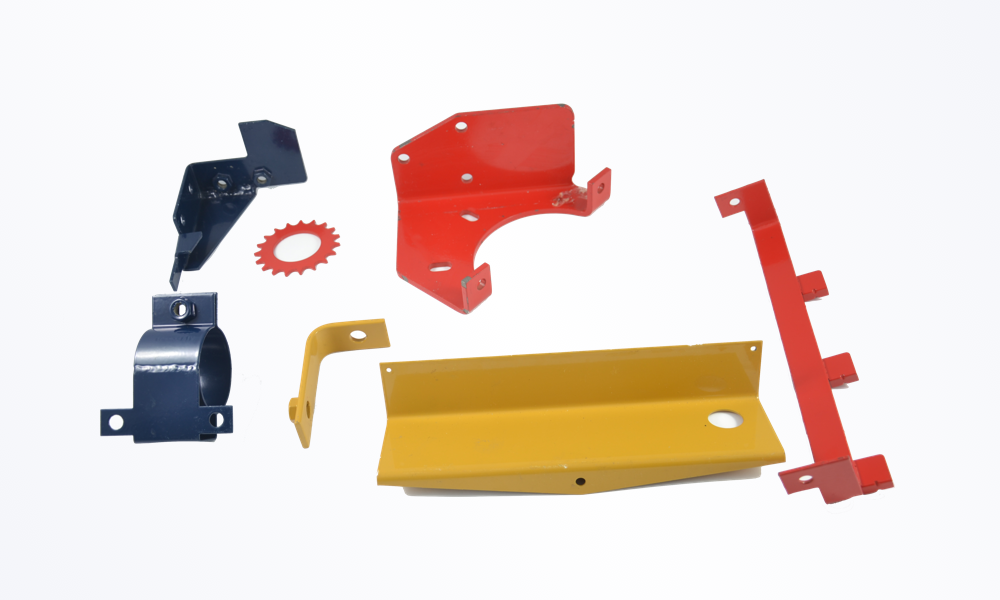
- Key Advantages: Complete and uniform coating coverage on sharp inner corners, deep cavities, and welded fabrications; high resistance to stone chipping, chemical splash, and UV aging.
- Problems Solved: Provides dielectric insulation and durable aesthetics on structural frames manufactured via welded assemblies and industrial equipment enclosures in precision sheet metal work.
Surface Treatment Comparative Matrix
| Treatment Category | Reference Process | Typical Thickness | Salt Spray Resistance (ISO 9227) | Hydrogen Embrittlement Risk | Primary Applications at Filame |
|---|---|---|---|---|---|
| Mechanical | Shot Peening | N/A (cold working) | N/A | None | Compression & torsion springs |
| Galvanic | Zinc Electroplating | 5 – 15 µm | 96 h – 240 h | High (post-baking mandatory) | Clips, standard stampings |
| Galvanic | Electroless Nickel | 10 – 30 µm | 240 h – 500 h | Moderate | Sliding components, multi-slide parts |
| Conversion | Manganese Phosphate | 2 – 5 µm | ~ 24 h (with oil) | None | Break-in anti-galling, wire forms |
| Zinc Flake | Delta Tone + Delta Seal | 8 – 15 µm | 720 h – > 1,500 h | Zero (non-electrolytic) | Flat springs, safety fasteners |
| Organic | E-Coat (KTL) / Epoxy | 15 – 35 µm | 500 h – 1,000 h | None | Welded fabrications, enclosures |
Design Your Spring
Use Filame’s interactive calculation tool to size and preview your spring. Compute rates, loads, Wahl stress corrections, and submit verified parameters for rapid quoting.
Production capacities
Discover Filame's production capabilities in Anticorrosion Coatings & Industrial Surface Treatments: