Non-Magnetic Springs: Which Alloys Should You Choose?
Review Filame's technical selection guide for non-magnetic spring wires and discover our precision manufacturing capabilities in ultra-low permeability alloys (Phynox, CuBe2, Inconel).
Introduction
In certain industrial applications, springs must not only offer excellent mechanical properties but also have very low sensitivity to magnetic fields.
These requirements arise in medical equipment, measuring instruments, electronics, aerospace and certain high-precision industrial systems.
Choosing a non-magnetic material must not compromise the essential properties of a spring: mechanical strength, elasticity, fatigue resistance, corrosion resistance and stability at operating temperature.
FILAME presents the main alloy families suitable for manufacturing non-magnetic springs or springs with very low magnetic permeability.
1. What is a non-magnetic spring?
A spring is considered non-magnetic when the material from which it is made has a relative magnetic permeability (μr) very close to 1.
Relative magnetic permeability describes how a material responds to an applied magnetic field:
- μr = 1: ideally non-magnetic behaviour (vacuum / air).
- μr ≤ 1.01: very low magnetic permeability (common high-precision benchmark).
- μr ≤ 1.05: low magnetic permeability.
- μr > 1.05: a more pronounced magnetic response, which may be unsuitable for certain sensitive applications.
These thresholds are indicative and do not constitute a universally recognised standards-based classification.
[!WARNING] Evolution during manufacturing Magnetic permeability can change during spring manufacture, particularly as a result of wire drawing, cold working, forming and heat treatment. A material that is non-magnetic in the annealed condition will therefore not necessarily remain so after being made into a spring.
2. Which non-magnetic alloys are suitable for springs?
Several material families can be used to manufacture springs with very low magnetic permeability:
Cobalt-chromium alloys: Phynox and Elgiloy
Phynox and Elgiloy are particularly attractive alloys for high-performance non-magnetic springs.
They combine very low magnetic permeability with high mechanical strength, excellent fatigue resistance and good corrosion resistance. A relative permeability of approximately 1.0004 has been published for Elgiloy.
These alloys are particularly suitable for precision engineered springs, medical equipment and applications requiring high mechanical reliability.
Copper alloys: CuBe2, phosphor bronze and CuNiSi
Copper-based alloys form another essential family of materials:
- Copper-beryllium CuBe2 (C17200) can achieve high mechanical strength after precipitation hardening while retaining essentially non-magnetic behaviour (μr close to 1).
- Phosphor bronzes CuSn6 and CuSn8 are also non-magnetic and offer good elastic properties and saltwater resistance.
- CuNiSi alloys may be considered where a balance of mechanical properties, electrical conductivity and low magnetic sensitivity is required.
Nickel-based superalloys: Inconel
Certain Inconel alloys exhibit particularly low magnetic permeability:
- Inconel 625: stands out for its excellent corrosion resistance and very low magnetic permeability (μr = 1.0006).
- Inconel X-750: is an attractive option for springs subject to substantial mechanical loading or elevated operating temperatures (μr = 1.002).
- Inconel 718: may be considered for applications requiring particularly high mechanical strength. However, its permeability must be confirmed for the selected metallurgical condition.
- Inconel 600: under documented conditions has low magnetic permeability (μr = 1.010), although its published value is higher than that of 625 or X-750.
Non-Magnetic Spring Alloy Selector & Permeability Matrix
Filter technical spring wire alloys by maximum allowable relative permeability (μr), operating environment, and mechanical constraints.
| Alloy & Standards | Relative Permeability μr | Spring Suitability | Core Mechanical Advantage | Heat Treatment | Magnetic Stability & Processing Note |
|---|---|---|---|---|---|
| Co41Cr16Ni15 / AMS 5833 / AMS 5834 | 1.0004 | Excellent | Ultra-low magnetic permeability combined with extreme fatigue life and biocompatibility. | Aging at 520°C for 5 hours | Retains virtually non-magnetic behavior (μr = 1.0004) even after severe cold drawing and spring coiling. |
| C17200 / CW101C / CuBe1.9 | ~1.000 | Excellent | High electrical conductivity combined with high yield strength after precipitation hardening; non-sparking (ATEX). | Precipitation hardening at 315°C – 330°C for 2–3 hours | Strictly non-magnetic (μr ~ 1.000) under all delivery conditions and mechanical deformations. |
| CW452K (CuSn6) / CW453K (CuSn8) | ~1.000 | Good to Very Good | Economical non-magnetic spring material with good elasticity and excellent saltwater corrosion resistance. | Stress relief annealing at 200°C – 250°C | Completely non-magnetic (μr ~ 1.000); cold forming does not generate ferromagnetic martensite. |
| CuNiSi (Copper Nickel Silicon) CW111C / C70250 | ~1.000 | Good to Very Good | Beryllium-free alternative offering a balanced combination of mechanical strength, electrical conductivity, and non-magnetic stability. | Precipitation aged at 450°C – 500°C (often supplied pre-hardened) | Remains virtually non-magnetic (μr ~ 1.000) under typical operational conditions. |
| 2.4856 / NiCr22Mo9Nb / UNS N06625 | 1.0006 | Good to Very Good | Exceptional pitting and crevice corrosion resistance in saltwater coupled with certified ultra-low magnetic permeability. | Stress relief at 370°C for 1 hour | Measured at μr = 1.0006 at 200 Oe (15.9 kA/m); highly stable austenitic matrix that does not form martensite. |
| 2.4669 / NiCr15Fe7TiAl / UNS N07750 | 1.002 | Excellent | High mechanical yield strength at elevated temperatures (up to 650°C) and cryogenic toughness (-200°C) with μr ≤ 1.002. | Precipitation hardening at 704°C for 16–20 hours | Published μr = 1.002 at 200 Oe. Low magnetic permeability preserved through thermal and mechanical cycles. |
| 2.4668 / NiCr19Fe19Nb5Mo3 / UNS N07718 | ≤ 1.005* | Excellent | Ultimate mechanical strength and creep-rupture resistance up to 700°C for demanding aerospace spring designs. | Double aging: 720°C / 8h + furnace cool to 620°C / 8h | Permeability depends heavily on specific metallurgical heat treatment; must be verified per lot if μr ≤ 1.01 is required. |
| 2.4816 / NiCr15Fe / UNS N06600 | 1.010 | Good to Very Good | High oxidation resistance at extreme temperatures; solid solution alloy with moderate permeability. | Stress relief at 460°C for 1 hour | Published value μr = 1.010 at 200 Oe. Higher permeability than Inconel 625 or X-750, but remains weakly magnetic. |
| 1.4401 / 1.4404 / X5CrNiMo17-12-2 | 1.005 – 1.05* | Good to Very Good | Molybdenum addition improves stability of austenite vs 302/301, reducing martensite transformation during cold coiling. | Stress relief at 350°C – 400°C for 30–60 min | Substantially more stable than 301/302, but severe cold drawing can still elevate μr above 1.02. Verification on finished spring is required. |
| 1.4310 / X10CrNi18-8 / AISI 301 / 302 | 1.05 – 2.0+ (Cold-worked) | Requires Validation / Magnetic | Standard benchmark spring alloy offering high tensile strength (Rm up to 1900 MPa) and low cost, but turns ferromagnetic under cold deformation. | Stress relief at 300°C – 350°C for 30 min (does not restore amagnetism) | CRITICAL CAUTION: Annealed strip is non-magnetic, but cold drawing into spring wire converts meta-stable austenite into ferromagnetic deformation martensite. MUST NOT be assumed non-magnetic without testing. |
| 17-7PH Stainless Steel 1.4568 / X7CrNiAl17-7 / AISI 631 | Ferromagnetic (μr >> 1.1) | Requires Validation / Magnetic | Exceptional elastic limit and high hardness achieved by precipitation aging; NOT suitable for non-magnetic requirements. | Condition CH900: aged at 480°C for 1 hour | Distinctly ferromagnetic in all hardened spring conditions. Do not select for non-magnetic or MRI-sensitive systems. |
|
!
No alloys match this specific filter combination Broaden your permeability threshold (e.g. μr ≤ 1.01) or switch to "All Families" to view available wire grades. | |||||
3. Comparison of magnetic permeability values
| Alloy | Relative permeability μr | Suitability for spring manufacture |
|---|---|---|
| Elgiloy / Phynox | 1.0004 for Elgiloy | Excellent |
| CuBe2 – C17200 | Close to 1 | Excellent |
| Phosphor bronze CuSn6 / CuSn8 | Close to 1 | Good to very good |
| CuNiSi | Close to 1 | Good, depending on grade and condition |
| Inconel 625 | 1.0006 | Good |
| Inconel 718 | To be confirmed for the condition | Excellent |
| Inconel X-750 | 1.002 | Excellent |
| Inconel 600 | 1.01 | Good |
| Stainless steel 316L – 1.4404 | Varies with cold working | Moderate to good |
| Stainless steel 316 – 1.4401 | Varies with cold working | Good |
| Stainless steel 302 | May become magnetic | Excellent |
| Stainless steel 301 – 1.4310 | May become magnetic | Excellent |
| Stainless steel 17-7PH – 1.4568 | Magnetic, depending on condition | Excellent |
[!NOTE] Technical notes
- The numerical values for Elgiloy and the Inconel alloys are taken from published technical data. For copper alloys and certain stainless steels, the expression “close to 1” is qualitative and is not a certified value.
- The Inconel values have, among other conditions, been published for an applied magnetic field of 200 oersted, approximately 15.9 kA/m.
- The stated properties are not necessarily representative of a finished spring after all manufacturing operations.
4. Why are stainless steels 301, 302 and 316 not always non-magnetic?
Austenitic stainless steels are generally considered non-magnetic or weakly magnetic in the annealed condition.
However, manufacturing spring wire often requires substantial cold working to increase mechanical strength. Cold working can cause part of the austenite to transform into deformation martensite, a phase with ferromagnetic behaviour.
- This phenomenon is particularly pronounced in stainless steels 301 and 302 (1.4310), which exhibit noticeable magnetic attraction once cold-drawn and coiled.
- Stainless steel 316 generally has a more stable austenitic structure thanks to its molybdenum content, but its permeability can also change during heavy processing.
- A spring made from stainless steel 301 or 302 must therefore not be regarded as non-magnetic without checking its actual magnetic permeability.
- Although stainless steel 17-7PH (1.4568) offers excellent mechanical properties, it is generally unsuitable when very low magnetic permeability is required.
5. How should the most suitable alloy be selected?
The choice depends on operating conditions and the mechanical properties required:
| Main requirement | Recommended alloys |
|---|---|
| Very low magnetic permeability | Elgiloy / Phynox, CuBe2 |
| High fatigue resistance | Elgiloy / Phynox |
| Good elasticity and controlled cost | CuSn6 / CuSn8 |
| High corrosion resistance | Inconel 625, Elgiloy / Phynox |
| High mechanical strength and elevated temperature | Inconel X-750 or 718, subject to magnetic validation |
| Electrical conductivity and non-magnetic behaviour | CuBe2, CuNiSi |
| Stainless steel spring with moderate magnetic requirements | Stainless steel 316, after verification |
For the most demanding applications, magnetic permeability, mechanical strength, fatigue resistance and operating conditions should be assessed together.
6. Why magnetic permeability after manufacture matters
When a spring must meet a non-magnetic requirement, specifying the alloy designation alone is insufficient.
The technical specification should ideally state:
- The maximum permitted relative magnetic permeability (μr).
- The metallurgical condition of the material.
- Any heat treatments to be applied.
- The temperature and measurement conditions (applied field intensity).
- Whether testing of the finished springs is required.
For sensitive applications, including measuring equipment and certain medical devices, validation on the finished component may be essential.
[!IMPORTANT] Distinction with MRI compatibility A low magnetic permeability requirement must also be distinguished from MRI compatibility, which requires a broader assessment including imaging artifacts, RF heating, and Lorentz forces.
7. FILAME’s expertise in engineered springs
Manufacturing engineered springs requires careful material selection based on mechanical properties, the operating environment and the customer’s specific requirements.
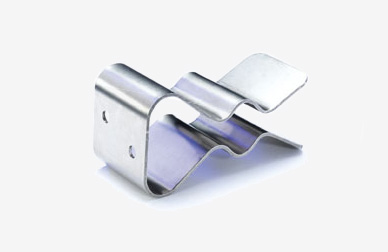
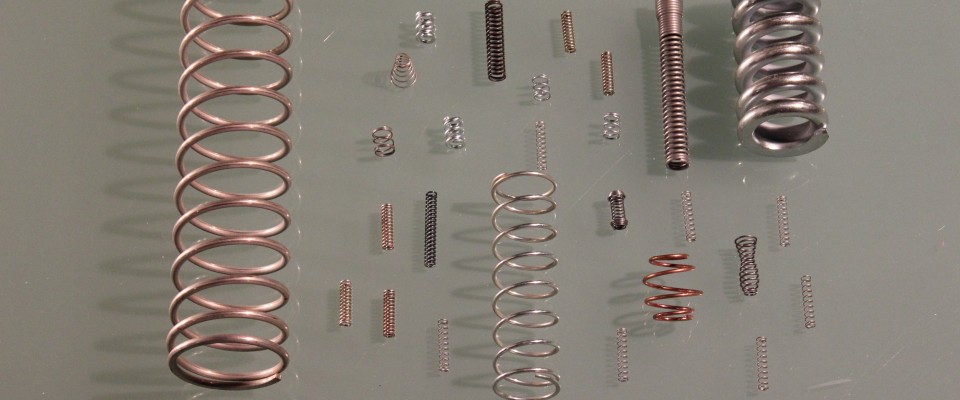
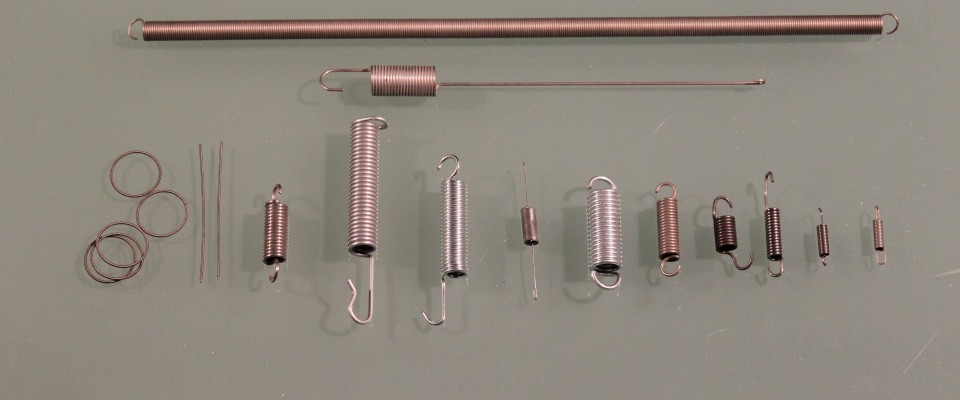
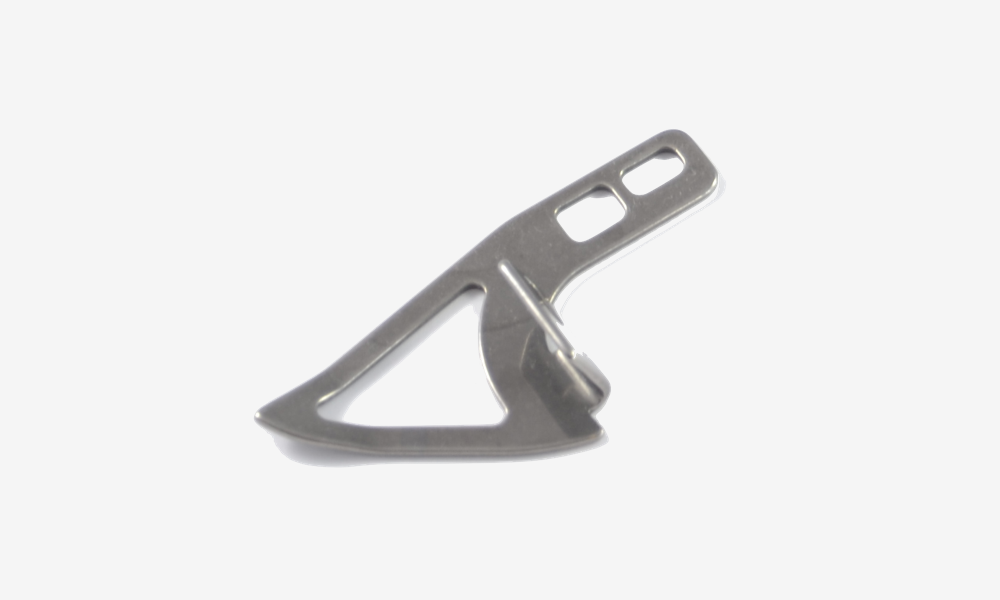
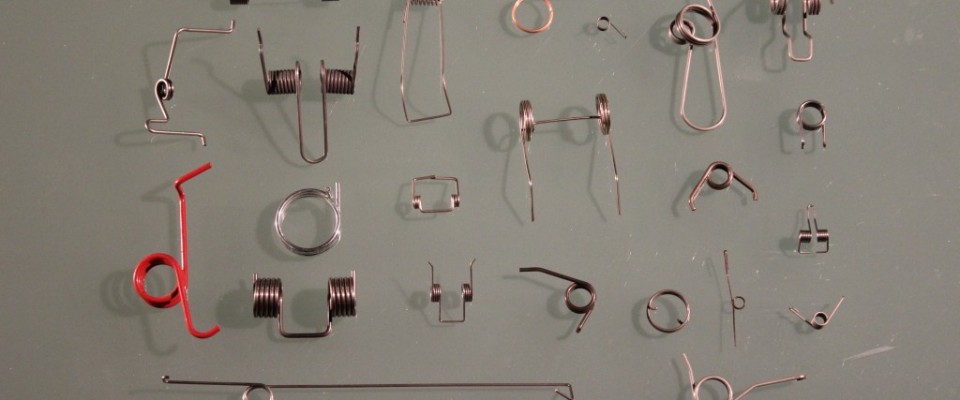
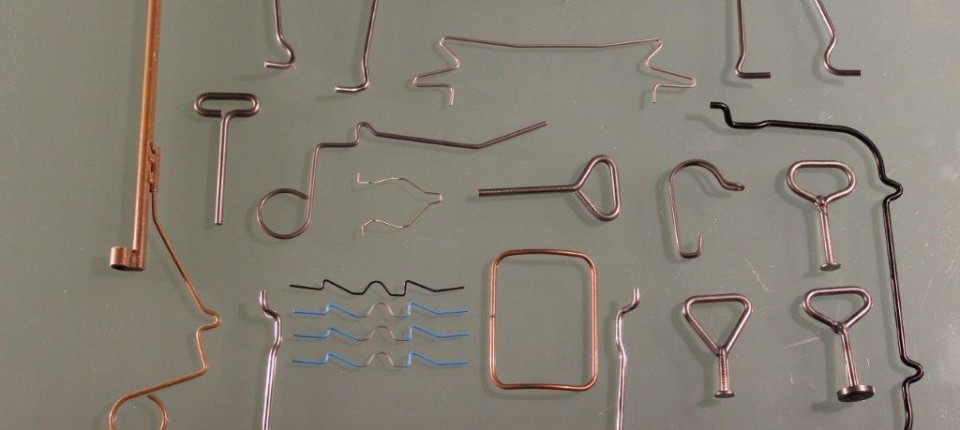
FILAME manufactures compression springs, extension springs and torsion springs, as well as formed wire parts, spring clips and flat springs.
For applications requiring low magnetic permeability, the alloy choice should be considered from the design stage onwards:
- Feasibility studies: combined evaluation of elastic deflection, coiling limitations, and electromagnetic tolerance.
- Precise heat treatments: in-house furnaces ensuring optimal stress relief or precipitation aging cycles (up to 704°C for Inconel X-750).
- Quality assurance: ISO 9001 certified quality management with EN 10204 3.1 material traceability and automated optical inspection.
Are you looking for a non-magnetic spring for a specific application?
Send FILAME your drawing, required mechanical characteristics, operating conditions, and maximum permissible magnetic permeability via our contact form. Our team can assess the feasibility of your spring and advise on the materials best suited to your specification.
Design Your Spring
Use Filame’s interactive calculation tool to size and preview your spring. Compute rates, loads, Wahl stress corrections, and submit verified parameters for rapid quoting.
Technical Reservation & References
Technical reservation – Validation of permeability values
In every case, numerical values of relative magnetic permeability (μr) must be confirmed against the supplier’s current technical datasheets for the actual alloy and delivery condition. This is especially important for spring wire supplied in the spring temper condition, and after forming and any subsequent heat treatments. Where the application specifies a maximum permeability, this requirement should be agreed contractually and, where appropriate, verified by measurements on the finished springs. The figures in this guide do not constitute a contractual guarantee.
Technical sources and references
- [1] MatWeb – Elgiloy, material property datasheet: matweb.com
- [2] Special Metals – INCONEL alloy 625, technical bulletin: specialmetals.com
- [3] Arnold Magnetic Technologies – Inconel, comparative technical datasheet: arnoldmagnetics.com
Production capacities
Discover our manufacturing capabilities for non-magnetic springs, wire forms, and clips: